METEOROLOGY & ATMOSPHERIC MODELLING

Site-Specific Meteorological Data and Atmospheric Modelling

Custom meteorological datasets, TAPM and WRF modelling, and CALMET, AERMET, CALPUFF and AERMOD-ready inputs for projects across Australia.

Meteorology

Site-specific meteorological analysis and modelling that improves confidence in approvals, investigations and decision-making.

Meteorology drives air quality outcomes. Wind, stability, mixing height, rainfall and temperature all change the direction, extent and intensity of an emissions impact. Air Environment's air quality modelling consultants build site-specific meteorological datasets for projects across Australia, supporting approvals, compliance programs, investigations and high-stakes decisions.

  • Site-specific meteorological datasets built for your location and end use
  • Stronger dispersion modelling inputs, with assumptions documented for review
  • Plain-English interpretation of the weather drivers behind your impacts
  • Defensible methods and fit-for-purpose scope, not generic weather summaries

Trusted by industry, government, developers and legal teams across Australia

GHD logo TasWater logo Fotowatio Renewable Ventures logo WR Lawyers logo

Our meteorology capabilities

Custom meteorological datasets

Site-specific datasets for any location in Australia, configured to local conditions and the end use of the data.

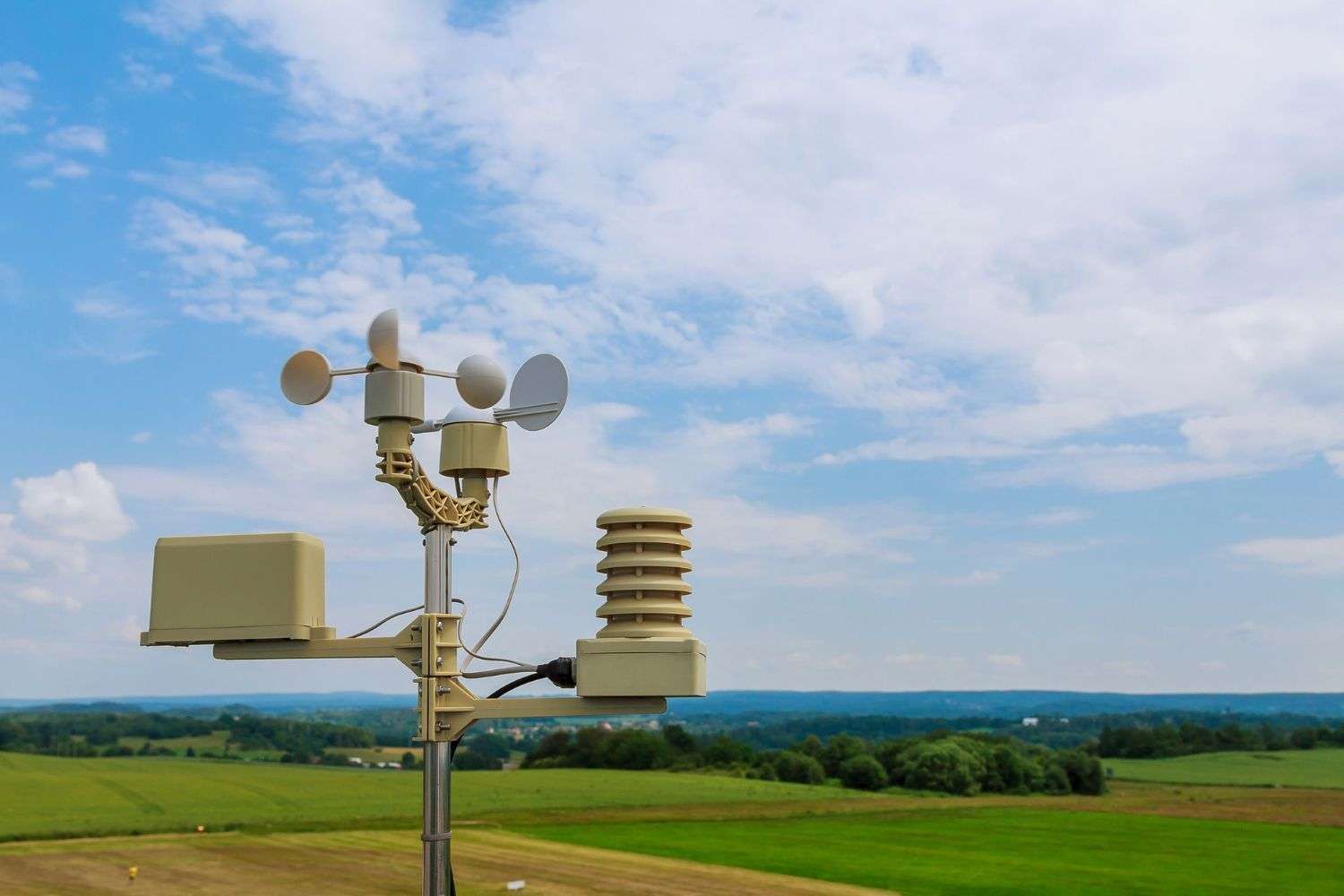
Numerical weather prediction modelling

We run and optimise prognostic models to produce high-resolution, three dimensional wind, temperature and stability fields across your assessment area.

CALMET and AERMET processing

We build CALMET and AERMET datasets with high-resolution GIS treatment of land use, surface parameters and terrain, improving model accuracy for regulatory assessment.

CALPUFF and AERMOD-ready inputs

We convert prognostic model output and weather station observations into the formats CALPUFF and AERMOD need, so dispersion modelling starts from solid inputs.

Observations and reanalysis integration

We combine station observations with reanalysis products to improve representativeness and fill gaps in the record.

Quality assurance and validation

We apply quality checks and detailed statistical model performance evaluation, then document the assumptions, so datasets arrive review-ready.

GIS and terrain-based configuration

We use GIS and terrain data to configure land use, surface roughness and topographic effects, so plume behaviour reflects the real site rather than a flat approximation.

Interpretation and technical reporting

We explain what the weather means for your impacts and deliver structured reporting built for approvals, licence submissions and peer review.

Models

The meteorological and dispersion models we run

Buyers usually want to know one thing before anything else: can you run the model my regulator will accept. Here is the full set, and what each one is actually for.

ModelTypeWhere it fits
TAPMPrognostic meteorologicalCSIRO's model, used to generate a full meteorological dataset where observations are sparse, unrepresentative or absent.
CALMETDiagnostic meteorologicalBuilds the varying wind field CALPUFF needs, with GIS treatment of land use, surface roughness and topography.
AERMETMeteorological pre-processorPrepares surface and upper air data into the surface and profile files AERMOD requires.
CALPUFFNon steady state puff dispersionComplex terrain, coastal recirculation, calm and light wind conditions, odour, and longer transport distances.
AERMODSteady state Gaussian plumeRegulatory point, area and volume source assessment on simpler terrain and shorter transport distances.

Swipe the table sideways to see all columns.

Model choice is not a preference. It is driven by the guideline that applies in your jurisdiction, and by the terrain, sources and receptors involved. Because we run the full range, the recommendation is not shaped by which licence we happen to hold. Legacy models such as AUSPLUME are also available where a historical assessment needs to be reproduced or challenged.

3%3%6%6%9%9%12%12%NNEESESSWWNWcalmWIND SPEED (m/s)0.5 – 1.51.5 – 3.03.0 – 5.05.0 – 8.0> 8.0Calms: 5.0% of hoursWinds arrive from the south-east 11.2%of the year at this location.Receptors sitting to the north-west aretherefore downwind more often than anyother direction, which is where anassessment should focus first.
Figure: illustrative wind rose for a coastal site, showing direction frequency by wind speed band. Not client data. A wind rose is usually the first thing a reviewer looks at, because it shows which receptors sit downwind, how often, and under which wind speeds.

Why choose Air Environment's air quality modelling consultants

We are air quality consultants first and modellers second. The meteorology is built around the decision in front of you, not around a default model setup.

Fit-for-purpose configuration

We tailor the approach to your site and decision context, rather than applying one-size-fits-all settings.

Better inputs for better modelling

We focus on the meteorological parameters that materially affect dispersion and impact outcomes.

Transparent assumptions and documentation

Methods, inputs and limitations are clearly described to withstand regulator and stakeholder scrutiny.

Efficient delivery without shortcuts

Streamlined workflows and scalable processing deliver on practical approval and reporting timelines.

Quality checks and validation

Where possible we compare outputs against observations and known patterns to build confidence in the dataset.

Clear interpretation for decision-makers

We explain what the weather means for your project, your risks and your next steps, not just the numbers.

Scoping

Do you need on-site monitoring, a modelled dataset, or both?

This is the question that sets your budget and your timeline, and it is much cheaper to answer before a scope is written than after.

On-site meteorological monitoring

A weather station installed at or near your site, recording the conditions that actually occur there.

Strongest when

The site sits in complex terrain, a regulator has asked for measured data, or the dataset is likely to be contested.

Timeline

Typically a full year of record before annual statistics are usable, plus siting, installation and commissioning.

Watch for

Station siting, exposure and data completeness. A poorly sited station produces a record that will not survive review.

Prognostic model dataset

A three dimensional weather field generated by models for your exact location and assessment period.

Strongest when

No representative station sits nearby, the approval timeline is short, or you need several years to capture variability.

Timeline

Weeks, because the model runs over a historical period rather than waiting for one to pass.

Watch for

Configuration and validation. Output is only as good as the domain, grid resolution and physics options behind it.

Most projects end up using both: a modelled dataset for coverage and depth, with observations to validate it. We will also tell you when monitoring is not worth the spend on your site.

What you receive

Every meteorology engagement lands as a defined set of deliverables, not a folder of raw output.

Modelling-ready meteorological files

Datasets in the format your dispersion model needs, whether that is CALMET output, a matched AERMET surface and profile pair, or a CALPUFF-ready sequence.

Model setup documentation

Domain, grid resolution, physics options, land use and surface parameters, all recorded so the configuration can be reproduced by a third party.

Statistical performance evaluation

Comparison against observations using standard performance measures, so the accuracy of the dataset is quantified rather than asserted.

Wind roses and summary statistics

Seasonal and annual wind roses, stability class distributions, and the mixing height statistics that drive worst-case conditions.

A written technical report

Plain-English interpretation of what the meteorology means for your impacts, structured for approvals and peer review.

Support through review

We answer regulator and peer reviewer questions on the dataset after submission, not just up to it.

Where meteorological data changes the outcome

Development approvals and EIS

Meteorological datasets and modelling inputs for planning applications, environmental impact statements and works approvals.

Environmental licensing and compliance

Weather context for licence conditions, exceedance investigations and ongoing compliance reporting.

Odour and dust complaints

Wind and stability analysis that narrows down likely sources and timing, alongside our odour consultant and dust assessment teams.

Mining, resources and energy

Site-specific weather fields for open-cut operations, processing plants, and wind and solar developments.

Waste, wastewater and agriculture

Meteorology for facilities where emissions are highly weather-dependent and sensitive receptors sit close by.

Litigation and expert evidence

Independent meteorological analysis and expert testimony for court, tribunal and mediation.

Process

How we deliver defensible outcomes

01. Define the decision and risk

We clarify what must be proven and what the project needs to achieve.

02. Design the right approach

Monitoring, sampling and modelling designed to be credible and efficient.

03. Analyse and stress-test

We interpret results, test assumptions and quantify uncertainty where needed.

04. Report clearly and support outcomes

Regulator-ready reporting, stakeholder clarity, and support through next steps.

Testimonial

Hear From Our Clients

quote

I would recommend Air Environment for any matter involving the detailed analysis and interpretation of meteorological data and the development of atmospheric meteorological models.

Edie Mather
Development – Australia
quote

Andrew and the team proved to be very flexible and responsive in accommodating changes and providing strategic and technical advice. I would highly recommend Air Environment and will certainly use them again.

Dr Stuart Winchester
Principal GeoEnvironmental Scientist for Energy and Resources
quote

Andrew’s reporting and evidence provided to the court was thorough, clear, compelling and to the point and resulted in the client achieving a successful outcome.

William Gallagher
Principal Lawyer

Air Environment capability statement

A short overview of our services, the models we run, our laboratory capability and the project experience behind them. Useful if you are building a shortlist or need something to circulate internally.

PDF, no form to fill in
Download the capability statement
Faq

Answers to common questions

Common questions about meteorological monitoring, modelling datasets, model selection, and how we support approvals, compliance and investigations.

What meteorological data do you provide for dispersion modelling?

We supply site-specific datasets ready for CALPUFF, AERMOD, CALMET and AERMET workflows, generated from prognostic weather models, station observations and reanalysis products. Every dataset ships with documented sources, periods, processing steps and limitations, so the inputs can be reviewed alongside the model results.

Can you build a dataset if there is no weather station near my site?

Yes, and it is one of the most common reasons projects come to us. We run TAPM or WRF to generate high-resolution, three dimensional wind, temperature and stability fields for your exact location, then validate the output against the nearest credible observations to confirm it behaves sensibly.

What is the difference between CALPUFF and AERMOD?

AERMOD is a steady state Gaussian plume model. It treats conditions as uniform across the domain within each hour, which suits simpler terrain and shorter transport distances. CALPUFF is a non steady state puff model that tracks pollutant puffs through a varying three dimensional wind field, so it handles complex terrain, coastal recirculation, calm and light wind conditions, and longer transport distances more realistically. CALPUFF costs more to set up and run. The right choice depends on your terrain, your sources and the guideline that applies in your jurisdiction.

Can you use Bureau of Meteorology data for my assessment?

Sometimes, and it depends on what the station actually measures. Bureau stations are sited for weather forecasting rather than dispersion modelling, so a nearby station may not represent conditions at your site, and often will not include the upper air or stability information a model needs. We assess representativeness first, then either process the observations, supplement them, or generate a modelled dataset instead.

How much meteorological data do regulators usually expect?

It depends on the jurisdiction, the guideline being applied and the risk profile of the project. Regulators commonly look for at least one full year of representative data, and multiple years where inter-annual variability matters. We confirm the requirement against the relevant guideline before scoping, so you are neither paying for data you do not need nor short of what a reviewer will ask for.

Do you monitor on site as well as model?

Both. Our air quality monitoring consultants design, install and maintain meteorological and ambient air monitoring programs, then process the results into modelling-ready inputs. Pairing measurement with modelling is usually the strongest position when a dataset is likely to be challenged.

What makes your work “defensible”?

Defensible work is transparent and review-ready. We document assumptions, use fit-for-purpose methods, apply quality checks and statistical model performance evaluation, and present conclusions clearly so regulators and stakeholders can follow how we reached them.

Do you support development approvals and licensing, including EPL requirements?

Yes. We support approvals and licensing with ambient air and meteorological monitoring, source emission sampling, emission inventory development, atmospheric modelling, impact assessments, management plans and clear reporting aligned to decision-maker expectations.

Do you work Australia-wide?

Yes. We deliver air consulting services across Australia, including regional and remote sites, and have supported international projects for clients across Asia-Pacific, the Middle East, and North and South America.

Can you provide independent review or expert witness support?

Yes, where appropriate. We provide independent technical review and clear written opinions for high-scrutiny contexts. All of our senior consultants have experience giving expert testimony in court, tribunal and mediation settings.

Talk to our air quality consultants about the meteorology your project needs