Quick Summary
- Biofilters remove industrial smells by using microbes to consume odorous compounds
- A biofilter’s microbiology must be carefully maintained with regular maintenance
- The warning signs of a failing biofilter can be subtle
- Many sites first learn of biofilter issues through damaging and expensive EPA action
- Regular scientific odour testing gives early warning before failures strike
- Rigorous testing data can negate erroneous odour complaints
An industrial biofilter may not look impressive. It resembles a garden more than an industrial‑strength odour control device. But for industries that generate unwelcome odours, biofilters are the difference between being a good neighbour or the subject of community complaints, regulatory investigations and expensive legal disputes.
So, why does a biofilter normally smell like damp hay or mulch?
Across the globe, industries ranging from sewerage treatment plants and composting facilities to meat processors, rendering operations and other food processors use biofilters. And their purpose is simple. Remove odorous compounds before they escape into the environment.
But while the principle is straightforward, successful biofilter performance relies on biology, engineering, and ongoing scientific verification.
That’s because a biofilter is more than just a big pile of organic material, it’s a living ecosystem with a bustling community of microbes within it. And like any active environment, it needs the right conditions to stay healthy and effective so it can do this most important environmental job.
Nature’s Own Air Treatment System
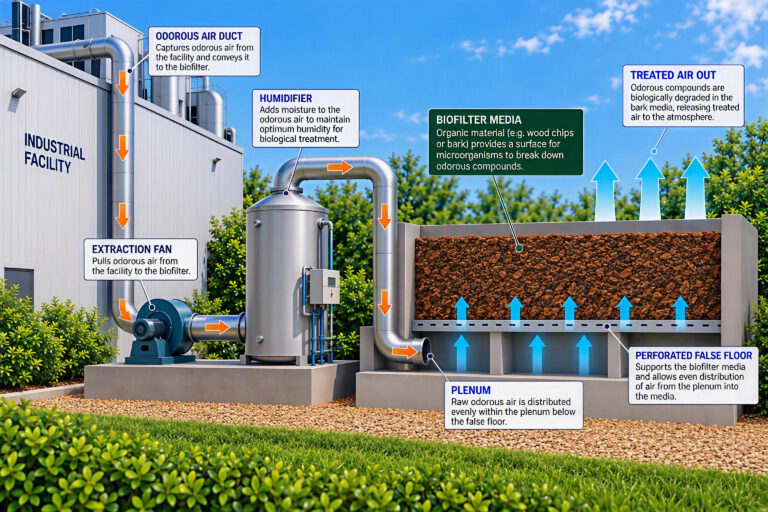
A biofilter puts naturally occurring microorganisms to work, using them to break down odorous compounds in the air.
The specially designed filter bed typically contains organic media such as wood chips, bark or a blend of suitable materials. Some designs also use compost or mulch. The materials are chosen to hold moisture while allowing air to flow through the bed, and they provide a home for bacteria, fungi and other microorganisms.
Odorous air is collected and directed through the bed. Compounds that dissolve in water move into the thin film of moisture coating the media, where microorganisms break down those they can biodegrade. In simple terms, the microbes use these compounds to fuel their activity and growth.
The key sign of a well-performing biofilter is the odour character of the air leaving the bed: there should be no recognisable raw inlet-gas odour, and any residual smell should be earthy or soil-like. A high removal efficiency is not enough if the treated air still carries the original odour character. Odour testing and operating data support this assessment by quantifying residual emissions and helping identify any problems.
It is much like the natural breakdown processes happening in soils and ecosystems, but in a managed environment designed to treat industrial air emissions.
Different Industries, Different Challenges
Biofilters are widely used, but different industries bring different odour challenges.
At sewage treatment facilities, hydrogen sulfide and other sulfur-containing compounds are common sources of strong odours. Hydrogen sulfide has a distinctive rotten-egg smell and can be detected by some people at concentrations as low as 0.5 parts per billion. Detection thresholds vary, and that figure does not apply to every sulfur-containing compound.
Industrial wastewater treatment plants can receive a much broader mix of compounds. The resulting odours depend on the incoming waste streams and how they are treated.
Well-managed composting can produce earthy organic odours. But if there is too little air in the compost, oxygen-depleted conditions can develop and generate stronger, more offensive smells.
At abattoirs, odours can come from livestock holding areas, manure and urine management, and wastewater treatment. Washdown water containing fats, blood and other organic residues adds to the treatment load. Rendering brings a different mix of odours from handling and storing animal by-products, cooking and processing them, and treating the resulting wastewater. The odour character depends on the materials, processes and operating conditions at each site.
Chemical manufacturing facilities can produce a different mix again, depending on the raw materials and processes involved. Whether a biofilter is suitable depends on the compounds present and the conditions of the air stream.
That is why biofilter design, operating strategies and monitoring programs need to match the source. Understanding the odorous compounds and the conditions the microbes need helps operators choose suitable treatment, maintain performance and manage odour emissions in line with the site’s compliance requirements.[1]
So, why the damp hay smell?
A healthy biofilter often smells like fresh soil, damp mulch, compost, hay or cut grass because those are the smells naturally produced by the filter media and the microorganisms living within it.
It’s like walking through a forest after rain: the earthy character comes from organic matter, microbes and natural biological processes. That is the residual character we want from a well-performing biofilter, rather than the recognisable smell of the raw inlet gas. It does not mean the outlet air contains no residual emissions.
Why Maintenance Matters
The effectiveness of a biofilter depends on maintaining the right conditions for microbial activity. The most important of these is moisture level. If the filter media becomes too dry, microbial activity declines and efficacy falls rapidly. Being too wet is similarly bad.
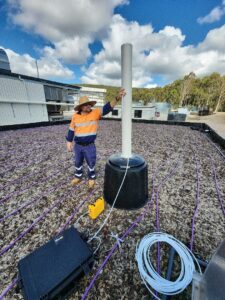
Uniform airflow is also critical. Air naturally follows the path of least resistance, so if sections of the biofilter become compacted or damaged, untreated air may bypass much of the treatment media.
Over time, organic media also degrades. The material gradually breaks down, changes structure and will require replenishment or replacement.
Temperature, nutrient availability and pH conditions can also influence performance.
The challenge is that many of these issues develop slowly. A declining biofilter may continue operating for months before anyone notices a problem.
Neighbouring residents are often the first to detect that something has gone wrong, and by the time their complaints roll in, the underlying issue may be expensive.
Regular testing helps identify problems before they become visible to regulators or the community.[2]
Recognising the Warning Signs
A healthy biofilter should emit only that earthy, damp hay smell, so if you can clearly recognise the source odours being treated the biofilter needs attention. But these early warnings may be subtle.
An increase in odour complaints from neighbouring properties is one obvious indicator, but by that stage the problem may already be attracting attention from regulators. More useful are the operational signs that can be detected before off-site impacts become significant.
Operators may notice areas of the biofilter becoming unusually dry or excessively wet. Ponding water, surface cracks, compacted media or uneven bed levels are warning signs that moisture or airflow may not be evenly distributed. These changes warrant a closer look at the media condition and how the bed is operating.
Changes in pressure across the system can also signal emerging problems. Increased pressure may indicate compaction or blockages, while low pressure may suggest untreated emissions are escaping.
Regular odour impact assessment, field odour surveillance and biofilter performance testing help assess off-site risks, investigate reported odours and identify changes in treatment performance. Tracking results over time can support earlier intervention, although the warning available depends on the problem and monitoring frequency. Addressing emerging issues may avoid more extensive repairs and disruption.
Click to discover the microbial workforce inside a biofilter
|
The most remarkable aspect of a biofilter is that the treatment process is performed by living organisms. A single biofilter contains billions of microorganisms working together in a complex ecosystem. Different species specialise in breaking down different odorous compounds. Some target sulfur compounds commonly found at wastewater facilities, while others consume organic compounds associated with composting, rendering or food processing. This targeting is one reason biofilters remain popular across a wide range of industries. However, it is also why monitoring is so important. Changes in moisture, temperature or media condition can disrupt the microbial community and reduce performance long before the problem becomes visible from outside the system. |
When Smell Becomes a Compliance Issue
Odour is one of the most common triggers for environmental complaints because it directly affects people’s daily experience and is immediately noticeable. Residents do not need specialist equipment to know when something smells unpleasant.
Once an odour complaint is lodged, operators may face increased scrutiny from environmental regulators. Repeated complaints can lead to investigations, licence reviews, remediation requirements and, in some circumstances, legal proceedings – consequences that can extend well beyond mere compliance costs.
Add in operational disruptions, reputational damage and strained community relationships and it’s easy to see why preventing complaints is invariably less costly than dealing with them after they occur.
Regulators expect decisions to be supported by robust evidence, so when a site is threatened by complaints, operators need scientifically defensible data that demonstrates what is occurring and whether control measures are effective.
And, only with defensible scientific data can erroneous or misplaced complaints be negated.
Contact an Air Environment expert for a monitoring program to keep your biofilter out of the regulatory spotlight.
References
[1] EPA Victoria, Biofilters to Control Odour. [epa.vic.gov.au]
[2] EPA Victoria, Biofilter Design and Maintenance (Publication 1880). [epa.vic.gov.au]